


The History of Electric Cars | Their Invention, Rise, Fall, & Future
With the rising popularity of electric cars, you may not think twice about them. Even if you aren’t the owner of one, you likely have a basic understanding of how one works. The driver plugs its battery into a compatible charging station, lets it charge, and then drives off with the vehicle, sometimes for up to 200 miles or more on a single large. But how exactly did the electric car come to fruition? Below, you can learn all about the history of electric cars.
The Early Days of the Electric Car
It’s challenging to pinpoint the invention of the electric car to a single person or region. During the 1800s, there were multiple breakthroughs that helped the electric car eventually become what it is today. From approximately 1828 to 1835, inventors in the United States, the Netherlands, and Hungary all built their own versions of small-scale electric cars. In 1832, British inventor Robert Anderson created the first crude electric carriage. During the latter half of the 1800s, English and French inventors developed some of the first truly functional electric vehicles.
Who Invented the Electric Car?
In the United States, inventor William Morrison sparked interest in electric cars when his version debuted in 1890. This six-passenger vehicle was quite barebones and could only reach 14 miles per hour, but it set the stage for the future of electric vehicles. By 1900, nearly one-third of cars on the road were electric in the United States. Over the next decade, several auto manufacturers released them and their EV sales continued to increase.
The Rise and Fall of the Electric Vehicle in the 20th Century
It’s impressive that electric vehicles were able to gain traction as early as the start of the 20th century, as horses were still a popular mode of transportation at this time. As Americans were becoming more innovative, they began to look to the motor vehicle as a reliable form of transportation whether it was in its electric, gasoline, or steam version.
While steam was a popular energy source for powering trains and factories, it wasn’t very practical for propelling vehicles. Gasoline cars showed promise, but they produced unpleasant exhaust fumes, were noisy, and took a lot of manual effort to operate. Electric cars were often preferable among urban Americans, as they were easy to operate and didn’t produce a lot of noise or odor. General Motors entered the electric vehicle game in 1916 when GMC produced various electric trucks that featured lead-acid batteries.
However, several factors contributed to the electric vehicle’s downfall in the early 20th century. By the late 1910s, gasoline-powered vehicles were much cheaper to purchase than electric vehicles. The introduction of the electric starter to gasoline-powered vehicles also made them easier to operate than they had been in the past.
Still, the expansion of the American road systems caused Americans to want to travel longer distances. Rural Americans could access gasoline more easily than they could access electricity, so gasoline-powered vehicles began to surpass electric cars in terms of popularity.
Electric Vehicles Make a Bounce Back
By 1935, the electric vehicle had entered its dark ages. Consumers weren’t very interested in them because of the price and convenience of gas-powered vehicles, so companies no longer focused on producing electric vehicles. The EV experienced a 30-year hiatus, only to make a comeback in the late 1960s and early 1970s.
Starting in the late 1960s, the U.S. began to experience gasoline shortages and price hikes for oil. Things got particularly gloomy for gasoline vehicle enthusiasts thanks to the 1973 Arab Oil Embargo. With this embargo in place, consumers began to seek vehicles that relied on more readily available fuel sources.
Various auto manufacturers, including General Motors, stepped up to the plate to fulfill consumers’ needs and demands. GM developed a prototype for an electric car meant specifically for use in cities. In 1973, the brand introduced this model at the Environmental Protection Agency’s first symposium on Low Pollution Power Systems Development. Even though electric vehicles like this one were better than the ones in the early 20th century, they still had limitations. Many couldn’t exceed 45 miles per hour and could only charge a handful of miles before they needed to be recharged.
Congress was quite aware of this situation and passed the Electric and Hybrid Vehicle Research, Development, and Demonstration Act of 1976 as a result of it. This act gave permission for the U.S. Department of Energy to fund additional research and development of hybrid and electric vehicles.
The 1990s to Now
After the electric car experienced some developments in the 1970s, it only became popular again in the 1990s. The passage of acts like the 1990 Clean Air Act Amendment and the 1992 Energy Policy Act helped auto brands develop a renewed interest in electric vehicles. Beginning in 1996, GM manufactured the EV1, which was an electric car with a truly unique design. While it was eventually discontinued due to high production costs, it paved the way for future developments.
In late 2010, Chevrolet released the Chevy Volt. This car was much more commercially viable than the EV1, as it was a plug-hybrid that was affordable to the everyday consumer. Other changes in the U.S., like the addition of thousands of public charging stations under the 2009 Recovery Act, electric vehicles became more widespread. Today, in comparison to standard gas powered cars, EV’s are being made to tow more, have better millage, have the same, if not more, horsepower, and many more changes. The Future is looking bright for Electric Vehicles and we couldn’t be more excited to see what they continue to come out with.
Everything from heightened performance to cleaner energy is encouraging Americans to switch from gas-powered vehicles to electric ones. Government incentives are also pushing consumers to make the switch. When you compare Q2 of 2021 to Q2 of 2022, electric vehicle sales are up from 2.7% to 5.6%. With this impressive amount of growth, it appears that electric vehicles are only going to continue to become more desirable.
After reading about the fascinating history of electric cars, you may want to ditch your gas-powered vehicle and buy an electric one for yourself. You can start your shopping journey with our dealership at Cochran Chevrolet by comparing different electric vehicles to find the one that’s right for you and your family. Feel free to contact our team to get in touch and discuss whatever vehicle’s on your mind, whether it be a Bolt EV, an Equinox EV, or anything in between.
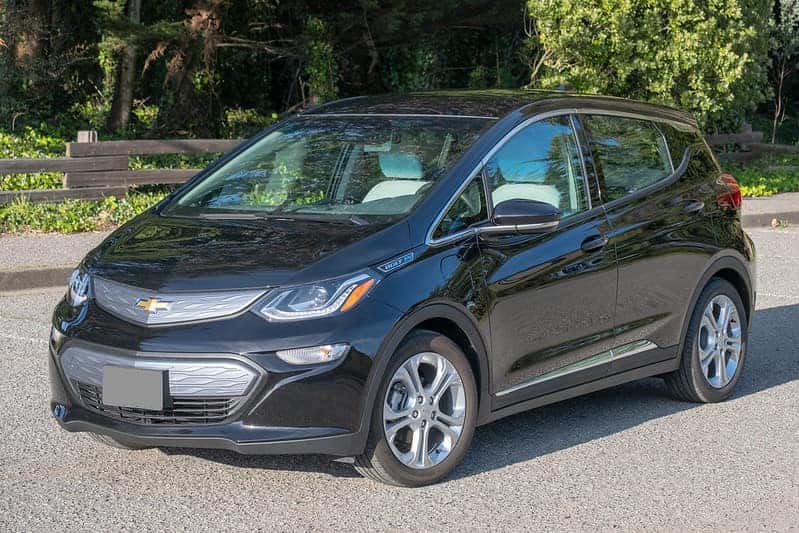
2019 Chevrolet Bolt EV – April 2019 (2736) by Gregory Varnum is licensed with CC BY-SA 2.0