


What is the Difference Between Electric and Standard Engines?
Are you undecided about whether to stick to gas-powered vehicles or go electric? If you are, you’re likely wondering what the differences are between a standard engine and an electric. Is one better than the other? And what can you expect? We’re here to answer your burning questions. So read on to get answers to these questions and more.
Which Engine Is More Powerful?
If you’re asking about engines, you probably have power in mind. So here are the brass tacks: electric engines have a much quicker acceleration rate, but standard engines are ultimately faster over time. The higher acceleration is due to the incredible efficiency of an electric engine versus the standard requiring internal combustion.
The Department of Energy reports that electric vehicles (EVs) “convert over 77% of the electrical energy from the grid to power at the wheels. Conventional gasoline vehicles only convert about 12% to 30% of the energy stored in gasoline to power at the wheels.” This is partly because electric engines have zero rpm max torque and don’t have a transmission process. The result is a faster start for EVs.
But electric engines don’t maintain the top speeds that standard engines do. And while electric engine speeds are more than enough for day-to-day use, not everyone is looking for average. So when Car and Driver studied these differences, they discovered the following:
- For 30-50 mph acceleration:
- Electric: 2.5 seconds.
- Standard (automatic transmission): 3.5 seconds.
- For 0-60 mph acceleration:
- Electric: 6.4 seconds.
- Standard: 6.0 seconds.
- For top-speed acceleration:
- Electric: 109 mph.
- Standard: 133 mph.
Which Engine Experiences Less Mechanical Issues?
Overall, electric engines are easier to maintain with fewer mechanical issues because of the engine’s simplicity. While these numbers vary based on vehicle and engine specs, standard gas-powered motors have over 2,000 moving parts. That leaves room for a whole host of things that can go wrong compared to electric engines that only have about 18 moving parts.
Top of mind for many considering electric engines are the frequent news stories on engine fires. But one study found that per 100,000 sales, there were 1,529.9 vehicle fires with gas engines and only 25.1 in those with electric engines. This debunks the widespread theory that electric engines have dangerous mechanical issues. There are other factors resulting in EVs having fewer problems, including:
- Not requiring engine oil means having no oil or filter change issues.
- Being relatively free of other vehicle fluids such as anti-freeze and coolant.
- No gas impurities or buildup to worry about.
- Utilizing fewer parts means fewer potential failures popping up.
- Featuring regenerative braking that reduces overall braking system wear and tear.
Which Engine and Components Are More Expensive?
There are a few different prices to consider when comparing expenses between electric and standard engines.
Sticker Price
Typically, you’ll pay more upfront for a vehicle with an electric engine than a standard. In fact, you can expect to pay about $10,000 more for an EV. But technological advances are gradually bridging that gap. For instance, the 2023 Chevrolet Bolt EV — billed as “America’s Most Affordable EV” — has a base price of $26,500. Many EVs are also eligible for the $7,500 Clean Vehicle Federal Tax Credit, driving the price down even lower. Adding a charging station to your home will also increase the upfront cost of an electric engine.
Lifelong Price
Per Car and Driver, vehicles with electric engines last around 300,000 miles, while gas-powered ones last about 200,000 miles. An extra benefit is that longer life doesn’t equal more expense, with fewer mechanical issues equating to smaller maintenance costs. The estimated lifelong maintenance cost for an EV is $12,200, in contrast to the much more substantial $20,200 average you can expect from a standard-engine vehicle.
The Zebra did the math, basing estimates on the average American driver’s 14,263 annual miles and August 2022 prices. They found that at $4.09 per gallon, a year’s worth of gas would cost $2,425. On the other hand, electricity was $.17 per kWh, so if your EV battery is 100 kWh, the cost would be approximately $998. That’s a sizable difference. Additionally, vehicles with electric engines aren’t at the whim of gas-price changes.
Battery price is an oft-cited cause of concern for EVs. They vary widely depending on different factors, ranging from as low as $4,000 to as high as $20,000. But according to Consumer Reports, maintenance on EVs is only half the price of vehicles with standard gas engines.
Which Engine Is Easier To Work On?
This answer circles back to our previous section on mechanical issues and the fact that electric engines have fewer moving parts than standard internal combustion ones. When it’s time to work on them, having only 17 or 18 components to check out is quicker and easier than a standard engine’s thousands. Taking apart and reassembling a standard engine is more time-consuming by leaps and bounds. Moreover, standard engine parts often require an extended series of actions performed by others, leaving your mechanic with a lot more work to find the misfiring trail.
What Are the Benefits of Each Kind of Engine?
Let’s compare the benefits of the two.
Electric
- Quicker acceleration.
- Lower maintenance costs.
- Not at the whim of gas price fluctuations.
- Tax credits are available for buying the vehicle and upgrading charging hardware.
- Over-the-air upgrades are often available.
- A quieter ride due to no motor sound.
- No environmentally harmful emissions.
Standard
- Higher top speeds, which are easier to maintain.
- Doesn’t need additional installation for fueling.
- A vastly larger selection of makes and models to choose from.
- Smaller upfront cost.
- More fueling stations than electric, with quicker fuel times.
- Familiar, making them easier to use.
Which Engine Sounds Best to You?
There are several differences between electric and standard engines, and weighing the pros and cons on your own may feel overwhelming. So if you’re in or around Boardman and Youngstown, Ohio, head on down to Cochran Chevrolet Youngstown today to check them out in person and see how they match up on the road.
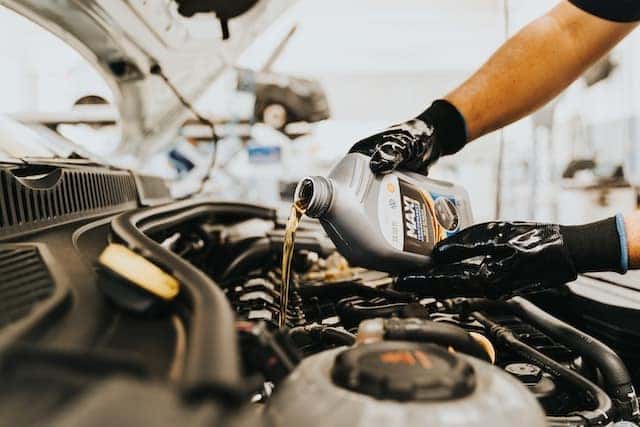
Pouring Oil to Engine by Daniel Andraski is licensed with Pexels License
0 comment(s) so far on What is the Difference Between Electric and Standard Engines?